
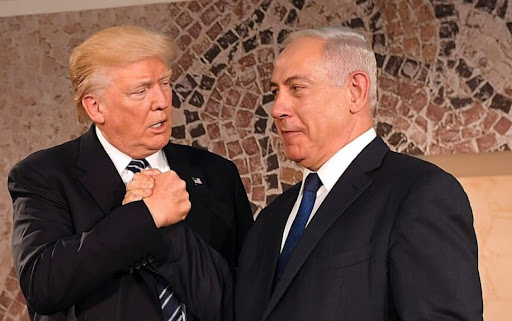
Wars reveal things. They reveal capabilities, resolve, and strategic coherence — or the lack of it. The US-Israel campaign against Iran has been revealing in all of these ways, and the South Pars gas field episode has added a particularly instructive chapter to what the conflict has disclosed. It has shown the world what the US-Israel alliance actually looks like under pressure: powerful, consequential, genuinely coordinated in many respects — and more complex, more internally contested, and more structurally divergent than its public presentation had previously acknowledged.
What the episode revealed about the United States: a president willing to acknowledge alliance disagreements publicly, even at some diplomatic cost. An intelligence community willing to confirm, before Congress, that the two allied governments have different objectives. A government that exercises real influence over Israeli military decisions but not absolute control. A strategy that is narrowing — from possible regime change toward defined nuclear containment — in response to the strategic and political realities of an expensive conflict.
What the episode revealed about Israel: a government confident enough in its alliance with Washington to strike major targets without American authorization. A prime minister who can absorb public rebukes from his most important partner while maintaining domestic political strength and operational independence. A strategic vision more ambitious than America’s, requiring a longer and more comprehensive campaign, pursued with persistence regardless of allied pushback.
What the episode revealed about the alliance itself: that it is strong enough to absorb public disagreements, narrow enough in actual coordination to allow independent action, and structurally divergent enough in objectives to generate these disagreements regularly. Director of National Intelligence Tulsi Gabbard’s congressional testimony was the most direct official confirmation of these realities. The South Pars episode was their most visible operational expression.
The war will continue. The alliance will continue. What the South Pars episode taught the world about both will remain part of the public record — a moment of unusual transparency about how the most powerful bilateral military partnership in the current world actually functions. Whether both governments use that transparency constructively — to align more honestly and manage more effectively — or simply paper it over with reassurance messaging, will determine what the alliance’s next chapter looks like.