
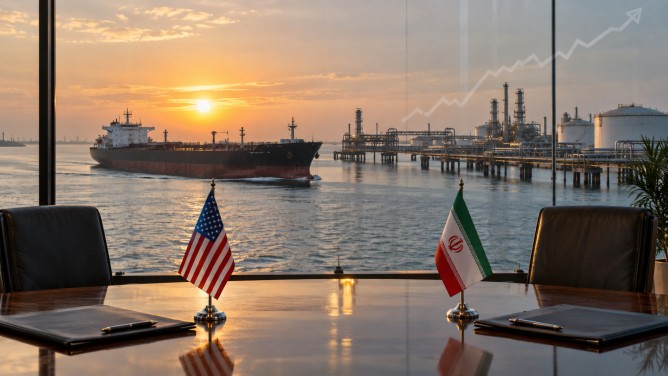
Oil prices rebounded on Tuesday, ending a four-day losing streak as investors monitored potential diplomatic talks between the United States and Iran at the United Nations General Assembly in New York. Brent crude futures for November climbed 1.7% to approximately $102 per barrel, while U.S. West Texas Intermediate (WTI) crude for October increased by a similar margin to nearly $97 per barrel.
The anticipation of possible engagement between U.S. President Donald Trump and Iranian President Masoud Pezeshkian has captured market attention, with Pezeshkian expected to participate in the UN gathering. This potential dialogue comes amid ongoing tensions in the Middle East, which have continued to support oil prices despite recent increases in shipments through the Strait of Hormuz.
Saudi Arabia has bolstered crude exports via the Strait of Hormuz, alleviating some concerns about global supply disruptions that had previously affected some shipments through its East-West pipeline. However, regional uncertainty persists as Yemen’s Houthi group, aligned with Iran, continues to carry out attacks. In response, China has called on Iran to help reduce these hostilities, particularly in light of rising tensions involving Saudi Arabia.
In Libya, additional supply-side pressures emerged after an armed group reportedly shut a valve on the Sharara crude pipeline. This action has resulted in a significant reduction in production at one of the country’s major oilfields, decreasing output by about 200,000 barrels per day. These developments contribute to the complex dynamics influencing oil markets as geopolitical factors intersect with supply considerations.