
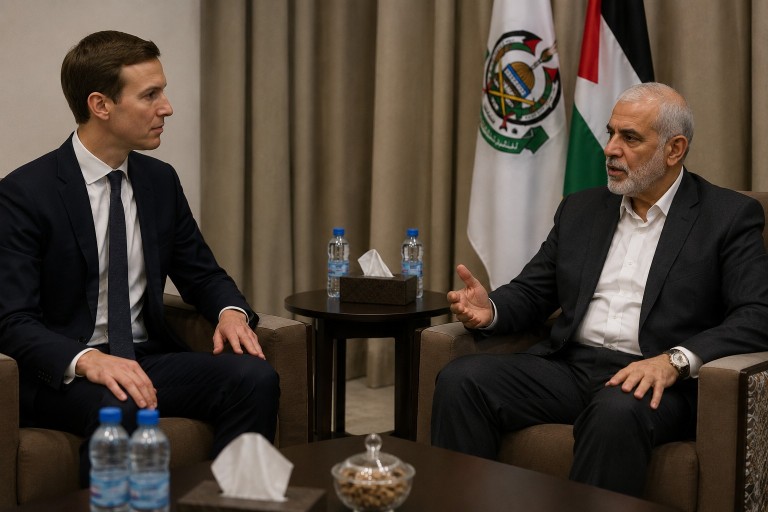
In a renewed diplomatic effort by the United States to jumpstart a stalled ceasefire in Gaza, Jared Kushner, a senior advisor and envoy, met on Sunday with Khalil al-Hayya, the political leader of Hamas, in Egypt. The meeting was part of a broader strategy as Kushner prepared to meet with Israeli Prime Minister Benjamin Netanyahu, who has recently rejected a 15-point ceasefire road map backed by the U.S. The proposed plan involves a gradual disarmament of Hamas, cessation of Israeli military operations, and withdrawal from certain areas of Gaza, alongside reconstruction efforts and the deployment of international security forces.
While Hamas has expressed a willingness to adhere to the road map, they demand that Israel first halt its attacks and withdraw to a previously agreed demarcation known as the “yellow line.” Furthermore, Hamas ties the relinquishment of its heavier arms to advancements towards establishing a Palestinian state, a concept that Netanyahu’s administration does not support. Netanyahu maintains that Israeli military presence will persist in Gaza until Hamas is completely disarmed, which has led to a deadlock on crucial elements of the ceasefire plan, including rebuilding efforts and the introduction of international forces.
Attended by officials from Egypt, Qatar, and Turkey, the discussions with Hamas were aimed at securing their commitment to the disarmament aspect of the plan before Kushner’s anticipated meeting with Netanyahu. Additionally, Kushner is expected to engage in discussions with Netanyahu alongside former British Prime Minister Tony Blair and the UN’s Board of Peace director Nickolay Mladenov. The diplomatic push is part of a larger effort to resolve the impasse preventing the advancement of the ceasefire agreement.
Several countries in the region, including Saudi Arabia, the United Arab Emirates, Jordan, Pakistan, and Indonesia, have voiced criticism over Israel’s dismissal of the U.S.-endorsed ceasefire plan, urging swift action to circumvent further delays. This diplomatic initiative comes as Netanyahu faces significant political pressure ahead of Israel’s October elections, with his coalition including ministers advocating for a more stringent stance on Gaza, thereby casting uncertainty over the ceasefire’s future.